
How General Contractors Get More Clients in 2026: What's Actually Working
Most GC businesses run on referrals until they don't. You finish a job, the owner sends you two more, you stay busy, and you tell yourself the pipeline is fine. Then one slow quarter hits — a developer pulls back, a relationship dries up, a market shifts — and suddenly you're looking at a half-empty bid board trying to figure out where the next job is coming from.
The contractors who grow consistently in 2026 aren't more talented than the ones who stagnate. They've built systems instead of relying on relationships alone. Referrals still matter — they always will — but they're one input in a pipeline that doesn't stop when your best contact retires.
This is what's actually working.
Stop Bidding Everything
The first thing that limits a GC's growth isn't lead volume. It's bid efficiency. Most mid-size shops bid 3–4x more work than they'll ever win, and they do it indiscriminately. That's not hustle — that's estimator burnout and overhead you can't recover.
The contractors who win more work bid less of it. They run a real bid/no-bid process: project type, owner relationship, competition count, margin potential, schedule fit. If a job doesn't score well across those categories, they pass. It sounds counterintuitive until you see what happens when your estimators spend their time on jobs you're actually positioned to win.
A contractor I talked to recently — running a $30M commercial shop in Colorado — told me they cut their bid count by 40% and their win rate went from 18% to 31% in one year. Same team. Same market. Just more selective.
The math works because estimating time isn't free. Every no-bid you make thoughtfully is capacity returned to bids where you have a real shot. See our breakdown of how to win more construction bids for the full framework.
Win More of the Bids You're Already Getting
Once you're bidding the right jobs, the next question is whether your proposals are actually competitive — not just on price, but on completeness and speed.
The most common reason GCs lose bids they should win is sub coverage gaps. You're missing a mechanical number. Your electrical sub didn't respond and you went in with a plug. The owner's estimator levels your bid against three competitors and you're $400K high on MEP because your coverage was thin.
The fix isn't finding better subs — it's outreaching more of them more efficiently. Most GCs are still managing ITBs out of a shared inbox and a spreadsheet that someone's assistant updates twice a year. By the time bid day hits, half your invitations were never confirmed and you're scrambling for coverage.
Platforms like Bidi automate the sub outreach and tracking so your estimators aren't spending bid week chasing confirmation emails. Better coverage means more complete bids. More complete bids mean fewer losses that had nothing to do with your price.
Build a Reputation That Brings Owners to You
Here's the shift that separates contractors who are always chasing work from the ones who get called before the RFP goes out: reputation.
Not reputation in the vague, handshake-at-a-networking-event sense. Reputation that lives online, where developers and property owners are doing their due diligence before they pick up the phone.
In 2026, owners Google you. That's not an exaggeration. Before a developer calls three GCs for a preconstruction conversation, they've already looked at your Google profile, your reviews, your project portfolio. So have their attorneys, their lenders, and their bonding contacts. What they find — or don't find — shapes whether you get the call.
The problem is that GCs are terrible at building this online presence systematically. You finish a job, the owner is happy, everyone shakes hands, and six months later the one client who had a billing dispute is your only Google review. The clients who loved your work aren't leaving reviews because nobody asked them at the right moment.
Using local business Google review software to automatically send review requests right at project closeout — when the relationship is warmest and the work is fresh — is one of the simplest, highest-ROI things a GC can do for their pipeline. You're not chasing reviews manually. You're building a record that does your business development work while you're on-site.
This matters more than most GCs realize. A contractor with 40 recent Google reviews and a 4.8 rating gets callbacks that a contractor with 3 reviews from 2022 doesn't — even if the work is identical. That's not fair, but it's the market.
Build a Portfolio That Pre-Sells You
Reviews get owners to call. Your portfolio gets them to commit.
Most GC websites have a "Projects" page with three photos from 2019 and a job name. That's not a portfolio — that's a placeholder. What owners actually want to see is project type, size, complexity, delivery method, and outcome. They want to know if you've built a project like theirs before.
The GCs who close preconstruction conversations fastest are the ones who can say "here are four projects similar to yours, here's what the owner said, here's how we handled the schedule when materials got delayed." That's a portfolio doing active business development, not just filling a page on your website.
Update it after every project. Get a quote from the owner. Take photos during construction, not just at ribbon cutting. If you did something technically difficult, explain how you solved it. That content compounds over time.
Become the GC Subs Want to Work With
There's a version of client acquisition that most GCs completely ignore: subcontractor relationships as a referral channel.
Subs work with multiple GCs. They talk to each other. When a developer asks a trusted sub who they'd recommend for a commercial ground-up, that sub is thinking about which GC pays on time, runs tight scopes, has organized bid day processes, and doesn't nickel-and-dime them on change orders.
If you're that GC, subs send you opportunities before you hear about them through a plan room. If you're not, they don't.
This doesn't require a formal program. It requires paying on time, communicating clearly, and making their job easier on your projects. The GCs who run tight bid packages — clear scopes, complete plan sets, reasonable bid windows — build the kind of reputation with subs that turns into referrals without asking.
Use Technology to Punch Above Your Weight Class
The last five years have made it genuinely possible for a mid-size GC to compete with the big shops on preconstruction quality. AI-powered plan analysis, automated sub outreach, and real-time bid leveling used to require a team. Now they don't.
If your estimating process still starts with manual quantity takeoff from paper prints, you're giving up 10–15 hours per bid that your competitors are getting back. That time doesn't disappear — it shows up in the quality of their proposals, the number of bids they can cover, and ultimately their win rate.
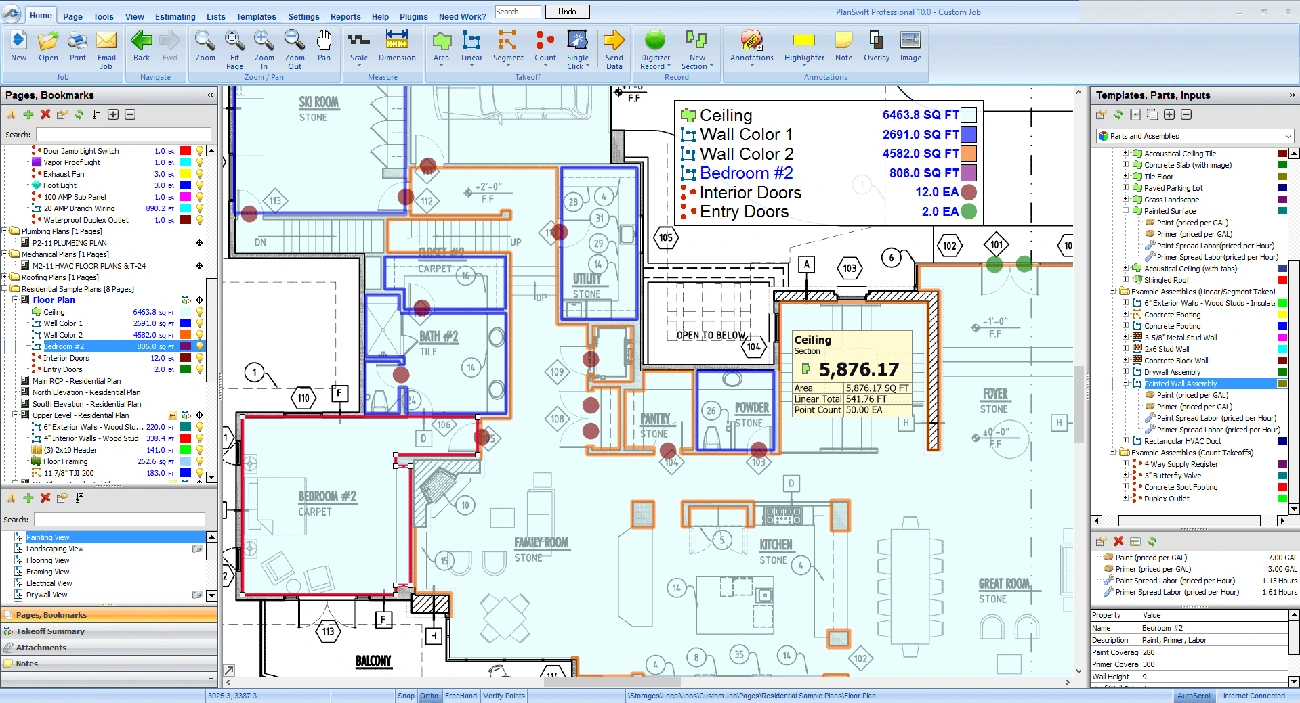
The best construction estimating software in 2026 reads plans, identifies scope, and generates quantity takeoffs in a fraction of the time it used to take. For a mid-size shop running 30–50 bids a year, that's a material change in how you operate.
The Compounding Effect
None of these things work in isolation, but they compound fast when you run them together. Better bid selection means your estimators spend time on winnable jobs. Better sub coverage means your numbers are complete on bid day. A strong review profile means owners call you. A current portfolio means those conversations close. Sub relationships mean you hear about opportunities early.
The GCs who grow in 2026 aren't doing anything exotic. They're running better processes than the shops still operating on inertia and hoping the referral network holds.
Start with whichever gap is biggest. For most GCs, that's either sub coverage or online reputation — the two places where effort is lowest and the upside is most immediate.
If you want to see how Bidi handles the bidding and sub outreach side, book a demo and we'll walk you through it with your actual market data.
