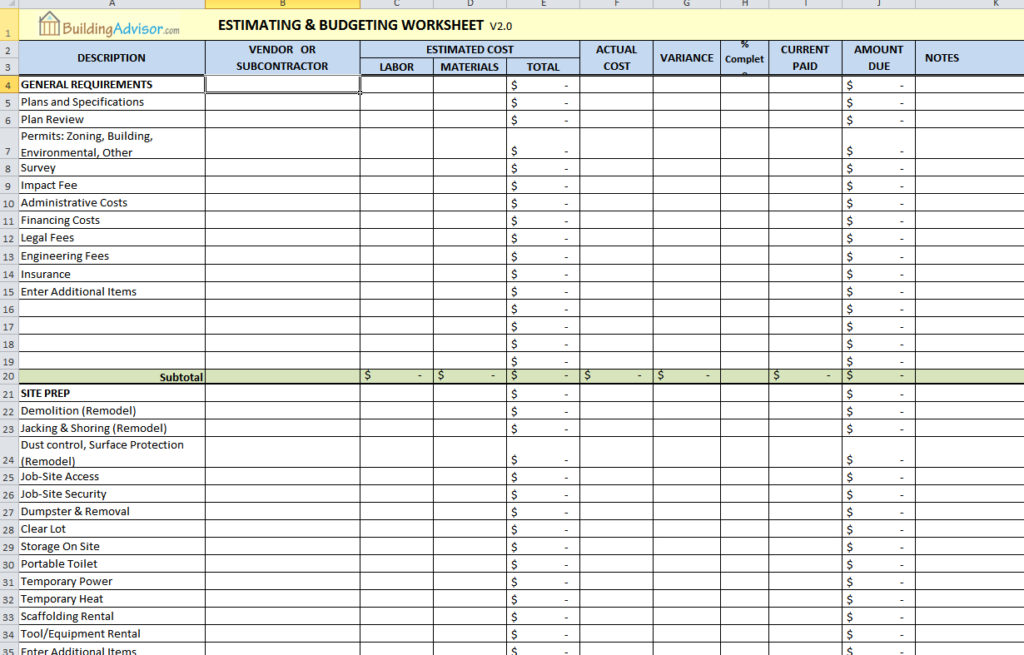
It's Thursday afternoon. Your bid is due Friday at noon. You've got scope spanning 15 trades, three subs who haven't responded, and an estimate that looks like four different people built it — because they did. CSI divisions construction estimating exists precisely for this moment. The MasterFormat framework gives every line item a home, every trade a lane, and every scope gap somewhere to hide until you find it. This guide is about finding it before the owner does.
Why Most Estimates Fall Apart Before the First Scope Gap
The real problem isn't missing numbers — it's missing structure. Most estimates that blow up in post-bid review don't fail because the estimator got the math wrong. They fail because nobody agreed on what was being priced in the first place.
You've probably been here: a sub quotes plumbing rough-in, you assume that includes the mechanical room connections, and they assume it doesn't. Nobody wrote it down. Nobody assigned it to a division. Six weeks into the project, someone's eating $18,000 in change orders, and it's probably you.
The Hidden Cost of Unstructured Estimates
Ad-hoc cost codes don't just create confusion — they create liability. A 2022 study by KPMG found that 69% of construction projects experience cost overruns, with poor scope definition cited as a primary driver. When your estimate is built on a custom spreadsheet with codes like "MISC LABOR" and "SITE STUFF," you've already lost the ability to compare your numbers against a sub's quote at the line-item level.
Duplicate line items are the quiet killer. You price temporary fencing under site work and again under general conditions. You capture drywall finishing under finishes and again under interior specialties. By the time you reconcile, you've either double-counted $30K or you've got a gap you can't explain to the owner.
Scope gaps tied to poor cost code structure are the leading cause of budget overruns on projects under $10M, where formal QA processes are rarely enforced.
What CSI Divisions Actually Do for a GC
CSI divisions are not a bureaucratic requirement — they're a communication protocol. MasterFormat, published by the Construction Specifications Institute, is the standard. CSI divisions are how that standard shows up in your estimate, your bid packages, and your conversations with subs.
Think of MasterFormat as the grammar and CSI divisions as the sentences. The standard tells you how to organize work. The divisions tell you where every dollar belongs. When your estimate speaks the same language as your specs and your sub's scope letter, scope gaps become visible instead of assumed away.
The Construction Cost Codes List: All 50 MasterFormat Divisions, Mapped to Estimating Reality
MasterFormat 2016 organizes construction work into 50 divisions across four major groupings — and knowing which groupings drive cost changes how you build your estimate. The Procore and ABC guides do a solid job listing all 50. What they don't do is tell you which ones actually matter when you're pricing a $4M office build-out on a two-week timeline.
The four groupings are: Procurement and Contracting Requirements (Divisions 00–01), Facility Construction (Divisions 02–19), Facility Services (Divisions 20–29), and Site and Infrastructure (Divisions 30–49). On a typical commercial project, 10 to 12 divisions account for more than 80% of total hard cost. The rest are either not applicable or absorbed into general conditions.
Divisions 00–01: The Ones Estimators Skip (and Shouldn't)
Division 00 and Division 01 are where your project overhead lives, and underestimating them is one of the fastest ways to lose money on a job you thought you won. Division 00 covers procurement and contracting requirements — bid forms, bonds, insurance, and contract conditions. Division 01 covers General Requirements — mobilization, temporary facilities, project management, quality control, and closeout.
Most estimators treat Division 01 as a rounding error. On commercial projects, General Requirements typically run 8–15% of total construction cost. If you're building a $5M project and you've budgeted 4% for general conditions, you've already given away $200,000 before the first footing is poured.
Build these into your construction cost estimate template as fixed line items, not percentages applied at the end. Mobilization, site fencing, dumpsters, superintendent time, and project closeout documents all belong here — priced individually, not guessed at globally.
Divisions 02–14: Where the Hard Cost Lives
The Facility Construction subgroup is where material takeoff construction errors are most expensive and most common. Division 03 (Concrete), Division 04 (Masonry), Division 05 (Metals), Division 06 (Wood and Plastics), Division 07 (Thermal and Moisture Protection), Division 08 (Openings), Division 09 (Finishes), and Division 14 (Conveying Equipment) collectively represent the bulk of a typical commercial project's hard cost.
Labor unit costs construction exposure is highest in Divisions 03, 05, and 09. Concrete formwork labor can vary by 25% between a crew working a simple slab and one working a multi-level pour with complex geometry. Finishes — drywall, painting, flooring — are where scope descriptions get vague and sub quotes diverge the most.
Division 08 (Openings) is a consistent source of material takeoff errors. Estimators count doors but miss frames. They count windows but miss hardware sets. A construction cost codes list that maps every component of an opening to a sub-line item under Division 08 catches those misses before they become RFIs.
Divisions 21–28 and 31–48: MEP, Site Work, and the Subcontractor Handoff
MEP and site work divisions are where the GC's job shifts from estimating to bid package management — and where scope alignment between divisions becomes critical. Division 21 (Fire Suppression), Division 22 (Plumbing), Division 23 (HVAC), Division 26 (Electrical), Division 27 (Communications), and Division 28 (Electronic Safety and Security) are almost always subcontracted.
The most common bid dispute in Facility Services? The overlap between Division 22 and Division 23. Plumbing subs own domestic water and sanitary. Mechanical subs own hydronic systems and equipment connections. The condensate drain from an air handler sits in a gray zone that both subs assume the other is covering. Price it explicitly in your bid package or you'll be paying for it twice — once in the change order, once in the relationship.
Site and Infrastructure divisions (31–48) cover earthwork, exterior improvements, utilities, and transportation. Division 31 (Earthwork) is where geotechnical surprises live. If your soils report is thin, your contingency in Division 31 needs to be fat.
How to Build a Construction Cost Estimate Template Around CSI Structure
Estimating construction from scratch without a CSI framework is like framing a building without a layout — you'll get something standing, but you won't like where the walls ended up. Here's a four-step process that works whether you're pricing a $500K tenant improvement or a $15M ground-up.
Step 1 — Map Your Scope to Divisions Before You Touch a Number
Before you open a takeoff tool, sit with the drawings and specs and assign every work item to a division. Every single one. This scope-mapping step takes 90 minutes on a mid-size project and saves you four hours of reconciliation later.
A GC estimator we spoke with — running a design-build firm in Nashville — told us something that stuck: *"I used to go straight into takeoff. Now I spend the first hour just mapping scope to divisions. Last month I caught a $40K HVAC scope gap because I noticed Division 23 had equipment specified that nobody's mechanical sub had quoted. That hour paid for itself forty thousand times over."*
Map your scope before you price it. This is the single highest-leverage step in structuring a CSI-aligned estimate.
Step 2 — Run Your Material Takeoff Construction by Division
Structure your material takeoff so every quantity is tagged to a CSI division from the moment you measure it. Don't run a global takeoff and sort it later. Assign division codes as you go — concrete quantities under Division 03, framing lumber under Division 06, roofing membrane under Division 07.
When a sub quote comes in, you can map it directly against your takeoff quantities at the division level. If your Division 22 plumbing takeoff shows 3,400 linear feet of pipe and the sub's scope letter mentions 2,100, you've got a conversation to have before bid day — not a change order to fight after award.
Tools like STACK and PlanSwift support division-level quantity tagging. Autodesk Takeoff integrates this with model-based workflows if you're working from BIM. The key is that the structure exists before the numbers do.
Step 3 — Apply Labor Unit Costs Construction by Trade
Labor unit costs vary 20–35% by region, and applying national averages without adjustment is one of the most reliable ways to underbid a job. RSMeans publishes city cost indexes that let you localize unit costs by metro area. A concrete finisher's labor unit cost in San Francisco runs roughly 40% above the national average. In Memphis, it runs about 15% below.
Apply labor unit costs at the division level using your historical data first, RSMeans second. Your own job cost history from similar projects is more accurate than any published index for your specific market and crew productivity. If you don't have historical data yet, RSMeans is your baseline — just apply the city cost index before you lock the number.
Don't over-engineer this step. A 10% regional adjustment applied consistently across all labor-heavy divisions is more useful than a perfectly calibrated number that takes three days to produce.
Step 4 — Use Your Construction Estimate Checklist to Close Scope Gaps
A division-by-division checklist run at the end of every estimate is the closest thing to a guarantee that you haven't left scope on the table. On a typical commercial project, you'll have 14–18 active cost divisions. Build a checklist that forces you to confirm: Is this division in scope? Is it covered by a sub quote? Does the sub's scope match my takeoff? Is there a spec section that nobody priced?
Run the checklist 24 hours before bid submission, not the morning of. Scope gaps found at 11 PM on bid day get patched with contingency. Scope gaps found two days out get priced properly.
This construction estimate checklist approach is the difference between an estimate you can defend in a scope review and one you're hoping nobody asks about.
Where Estimating Software Fits Into a CSI-Structured Workflow
The right estimating tool doesn't just do math — it enforces structure, and structure is what makes a CSI-aligned estimate defensible. The market has no shortage of options, but not all of them handle CSI divisions with the same depth.
What to Look for in a CSI-Ready Estimating Tool
Four criteria matter: native cost code mapping to MasterFormat divisions, division-level cost reporting, the ability to compare sub bids side-by-side at the division level, and export compatibility with CSI-formatted bid tabs. If a tool can't do all four, you'll be doing the structural work in a spreadsheet anyway — which defeats the purpose.
Most platforms check two or three of these boxes. Very few check all four without significant configuration.
The Trade-Off Most Platforms Don't Talk About
The honest trade-off in estimating software is between power and speed — and most platforms optimize for one at the expense of the other. Procore Estimating and Autodesk Takeoff are genuinely powerful tools with deep CSI integration, but configuring a 20-division estimate from scratch in either platform can take 6–8 hours of setup before you've entered a single quantity. For a GC running 40 bids a year, that setup time compounds fast.
STACK and PlanSwift are faster to deploy and work well for division-level takeoff, but their bid leveling and sub comparison features are limited. You'll find yourself exporting to Excel to do the comparison work that should happen inside the tool.
Buildertrend is built for residential and light commercial project management — it's not a CSI-structured estimating tool, and using it as one creates the same scope alignment problems you were trying to solve.
The gap in the market is a tool that's fast to configure, CSI-native from the start, and built around the GC's workflow of running takeoffs and leveling sub bids in the same place. That's the problem Bidi is built to solve.
The 5 CSI Divisions Where Estimators Lose the Most Margin
These five divisions account for a disproportionate share of budget overruns on commercial projects — not because they're complicated, but because they're consistently underestimated in predictable ways.
Division 01 — General Requirements. Estimators routinely budget 4–6% for general conditions on projects where 10–12% is accurate. The difference on a $3M project is $120,000–$180,000 in unrecovered overhead.
Division 03 — Concrete. Formwork labor is the culprit. Estimators price material accurately and underestimate the labor to build, strip, and finish complex pours by 15–25%. This is where your historical labor unit data earns its keep.
Divisions 22/23 — Plumbing and HVAC Overlap. The gray zone between these two divisions costs GCs an average of 2–4% of MEP contract value in unresolved scope disputes, based on patterns consistently reported in construction litigation data. Price the overlap explicitly or it disappears into a change order.
Division 26 — Electrical. Electrical bids have the widest spread of any trade on commercial projects. A GC estimating a 60,000 SF office build-out might see a 20–30% spread between the lowest and highest electrical bids. That spread isn't all margin — some of it is scope. Bid leveling at the division level tells you which.
Division 31 — Earthwork. Geotechnical conditions are the variable nobody fully controls. Estimators who price earthwork based on surface observations without a soils report routinely see 20–40% cost overruns when rock or unsuitable material shows up. Budget a contingency line item in Division 31 on every project where the soils report is preliminary or absent.
Frequently Asked Questions
What are the CSI divisions in construction?
CSI divisions are the standardized framework for organizing construction specifications and cost codes, published by the Construction Specifications Institute (CSI). The current standard, MasterFormat 2016, organizes all construction work into 50 divisions grouped into four major categories: Procurement and Contracting Requirements, Facility Construction, Facility Services, and Site and Infrastructure. In estimating, divisions give every line item a standardized home so that GCs, subs, and owners are all working from the same organizational structure.
How many CSI divisions are there?
MasterFormat 2016 — the current edition — includes 50 divisions. This is a significant expansion from the original 16-division format that most estimators trained on before 2004. Many older estimators and some regional markets still reference the 16-division structure informally, which can create confusion when bid packages use different organizational frameworks. If you're working with a public agency or a large owner, confirm which version of MasterFormat they require before you structure your bid.
How do CSI codes work in construction estimating?
CSI codes use a six-digit numbering system to assign every line item in an estimate to a specific division and subdivision. The first two digits identify the division (e.g., 03 for Concrete), the next two identify the section (e.g., 0300 for Cast-in-Place Concrete), and the final two identify the work result. In practice, estimators use these codes to tag every quantity in their takeoff, every line item in their estimate, and every scope item in their sub bid packages — creating an apples-to-apples comparison framework across all bids received.
What is the difference between MasterFormat and UniFormat?
MasterFormat organizes construction work by work results and materials — it answers the question "what is being installed?" UniFormat organizes work by building systems and assemblies — it answers the question "what does this system do?" UniFormat is most useful in early-stage conceptual estimating, when you're pricing by system (e.g., "exterior wall assembly") before design is complete enough for a detailed takeoff. MasterFormat is the right tool for detailed construction estimating, bid packaging, and cost tracking once you have drawings and specs to work from.
How do I use CSI codes to organize subcontractor bids?
Structure your bid packages so that each package maps to one or more CSI divisions, with explicit scope inclusions and exclusions written at the division level. When sub quotes come in, map each line item back to the corresponding division in your estimate. This makes bid leveling faster — you can see immediately if a sub has excluded Division 22 work that your estimate assumes they're covering. It also makes scope gap conversations with subs more specific and less adversarial, because you're both looking at the same division structure.
What is Division 01 in construction?
Division 01 — General Requirements — covers the project-wide costs that support all other work but don't belong to a specific trade. This includes mobilization and demobilization, temporary facilities (site office, fencing, utilities), quality control and testing, project management and supervision, submittals and RFI management, and project closeout. It's one of the most consistently underestimated divisions on commercial projects. Pricing Division 01 as a flat percentage of construction cost is a shortcut that routinely costs GCs 3–6% of project value in unrecovered overhead on projects with complex logistics or extended schedules.
CSI divisions construction estimating isn't about compliance with a standard — it's about building estimates that hold up when a sub pushes back, when an owner asks questions, and when the job is running and you need to know where the money went. The framework is only as useful as the system you use to apply it. If you're still stitching together takeoffs in spreadsheets and leveling bids over email, the structure is there but the speed isn't.
Book a 20-minute demo to see how Bidi handles CSI-structured takeoffs and bid leveling in the same workflow — no six-hour setup, no enterprise pricing. Bring your next set of plans and see it work on real scope.
*Reviewed by Baylor Jeppsen, Construction Estimating Expert and Founder of Bidi Contracting.*